Hands Like Ours All chapters
Chapter 2

Fortunes and Forests

How forests became fortunes, from gambier to palm

By Elaine Lim · 7 min read · Published 13 October 2026

Photo: Ian Mun

What do a car tyre, a fine cigar, a sheet of paper, and a bottle of shampoo have in common?

Aside from being a truly bizarre shopping list, each one owes much to the lush expanse of Maritime Southeast Asia. More importantly, each one sparked an industrial boom that transformed global trade forever.

This is the story of how rubber, tobacco, timber and palm grew from humble seedlings into massive global commodities, reshaping the economies of this interconnected archipelago from the early days of international shipping right up to the modern era.

Where nature became fortunes
SingaporeLate 1700s to 1900About 90%

of the island’s primary forest gone by 19001

Gambier and pepper

Johor and MalayaFrom the late 1840s to the early 1900s930,000

hectares of rubber in Malaya by 19222

Gambier and pepper, then rubber, then palm

Medan, SumatraFrom 1863500,000+

hectares allotted to foreign estates in East Sumatra by the Second World War3

Tobacco, then rubber, and palm

Southeast Asia1990 to 201032m

hectares of forest lost, about 12% of the region’s forest4

Plantations, including palm, the main cause

Late 1700s to 1900

Gambier: When Singapore Cleared Its Forest

The modern story begins in 1819, when the British established a trading post in Singapore at the southern tip of the Strait of Malacca.5 Even back then, the island’s ancient forests were already being cleared to make way for a highly lucrative cash crop: gambier.
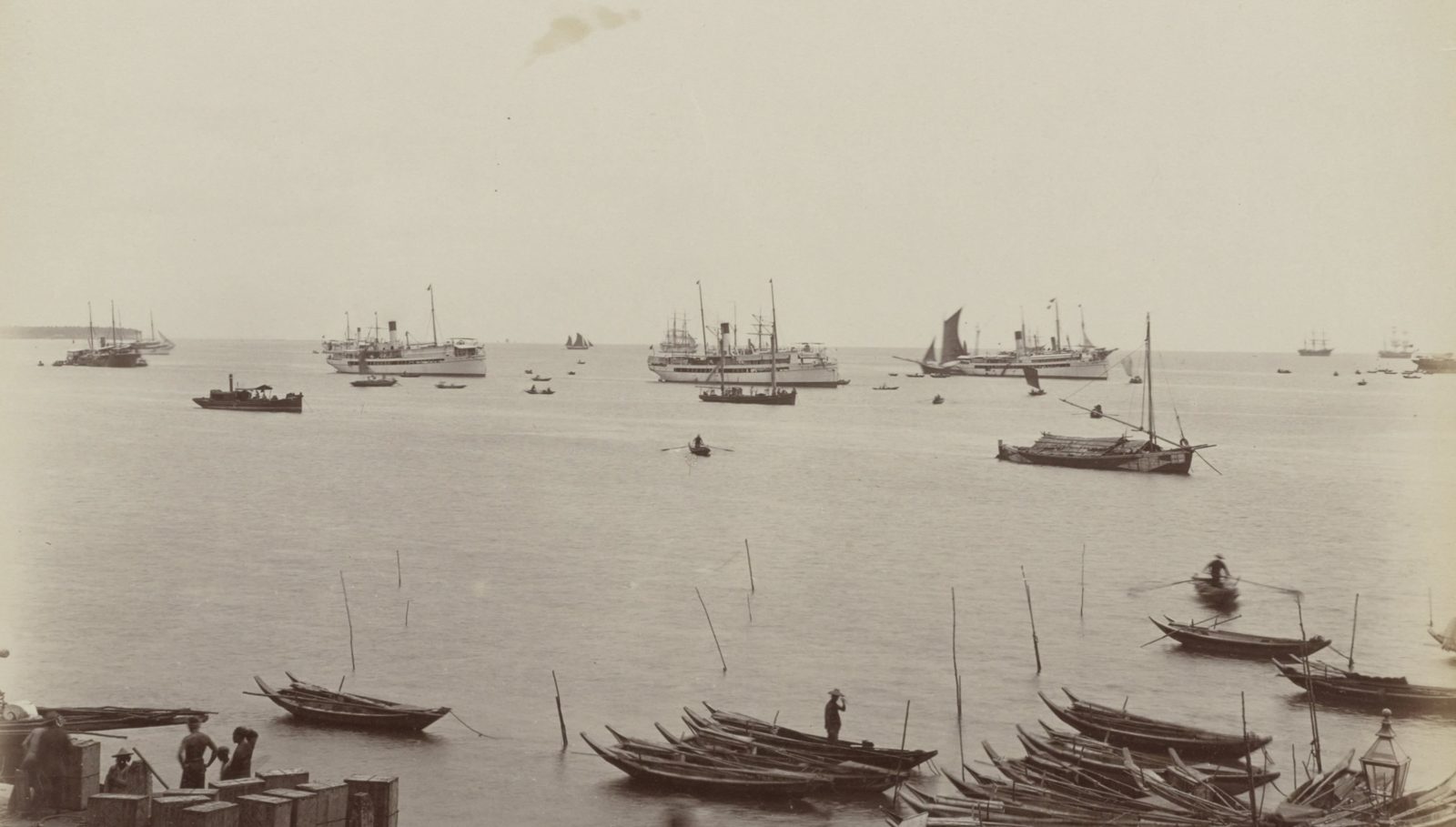
Steamships and sailing ships at anchor in Singapore harbour, with small wooden boats moored along the shore in front.
Ships and sampans in Singapore’s harbour, late 1800s. Photo: G.R. Lambert & Co. Rijksmuseum, Amsterdam. Public domain.

This unassuming shrub produced an extract heavily shipped to China, and from the 1830s, straight to Britain’s booming industrial factories for tanning leather and dyeing cloth.6,7

Driven by intense commercial demand, pioneering Teochew planters spread rapidly across Singapore. The island went from harbouring about 20 modest plantations in 1819 to more than 540 by 1855.1,6

As a result of this rapid agricultural expansion, about 90 per cent of Singapore’s primary forest had been completely lost by 1900.1

Singapore’s own forest
Beforethe gambier gardens
About 10%left by 19001
About 1%left today8
Each dot is one per cent of the island’s primary forest.
From the 1840s

Johor: Across the Strait After Singapore Drained Its Own Soil

When Singapore’s soil ran out, the planters crossed the Straits of Johor.

By the late 1840s, decades of intense farming had exhausted Singapore’s soil nutrients, and planters turned their attention north to Johor. The state’s ruler at that time, Temenggong Daeng Ibrahim, eagerly invited them in and licensed them to clear the lush land along Johor’s winding rivers.6,9,10

The move was an absolute jackpot. By the 1880s, within 40 years, Johor had become the largest gambier producer in the world,11,12 and the export duties collected on gambier and pepper, along with taxes on opium, spirits and gambling, helped fund and build the modern state.10,13

From 1863

Medan Tobacco: The Gold Standard for Cigar Connoisseurs

Across the Strait of Malacca in Sumatra, the ancient forests faced a different kind of boom. Under Dutch rule, foreign companies moved in to transform the landscape around Medan into massive tobacco fields.14 Their agricultural strategy was aggressively simple: cut the forests down and burn them off.15
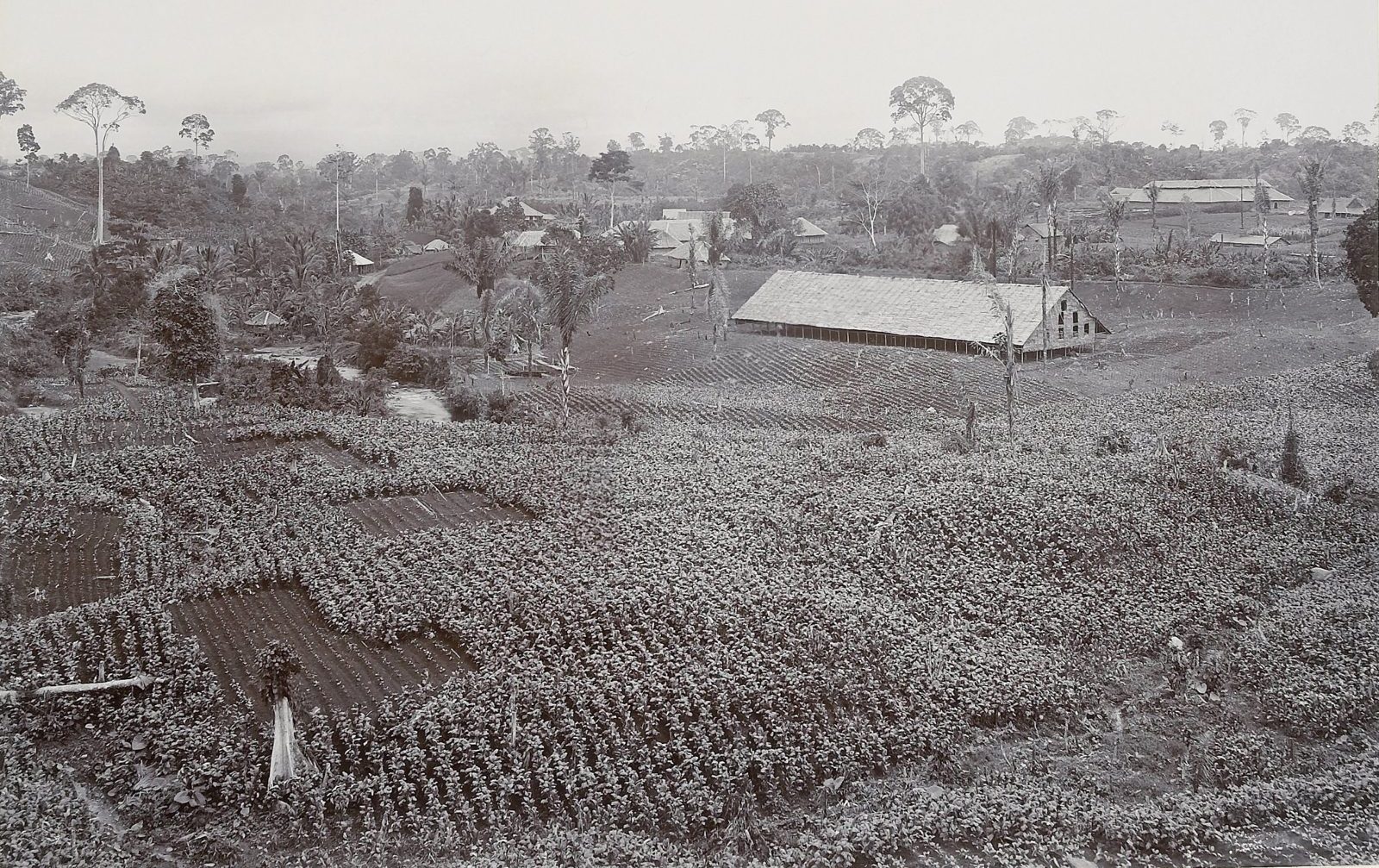
Tobacco fields on an estate near Medan, with a long drying shed, tree stumps among the crop and a few tall forest trees left on the horizon.
Tobacco fields on the Gambir Estate, near Medan, around 1885 to 1900. Stumps of the felled forest still stand among the crop. Photo: C.J. Kleingrothe. Rijksmuseum, Amsterdam. Public domain.

Medan’s tobacco was the absolute gold standard for cigar connoisseurs in Europe and America. By the First World War, a staggering 92 per cent or more of all cigar wrapper leaves imported by the United States came directly from Sumatra.16

What started as a modest 75-hectare trial in 1863 exploded into more than half a million hectares across East Sumatra by the Second World War.3

75 → 500,000+ hectares3
allotted to foreign estates in East Sumatra, 1863 to the Second World War

This massive influx of tobacco money built the region, prompting the Dutch to officially declare Medan a city in 1886.17 But just as tobacco reached its absolute peak, a new global obsession rolled in.

From 1900

Malaya’s Rubber Boom: Mad Ridley and His Pocketful of Seeds

The world suddenly developed an insatiable appetite for rubber, and the ancient forests quickly made way for it.

The driver behind this massive boom? Tyres. The invention of the air-filled tyre took over bicycles first, then cars, sending demand skyrocketing across the United States.18 At the same time, modern industries scrambled for rubber to use in electrical wiring and waterproofing.19

The crop was pushed relentlessly by Singapore Botanic Gardens director Henry Ridley, and his obsession paid off spectacularly. Ridley routinely stuffed his pockets with seeds, desperately trying to convince sceptical Malayan coffee farmers to plant them.20 His persistence paid off when a sudden coffee disease forced desperate planters to finally give his “mad” idea a shot, triggering the region’s first commercial rubber boom.21 Between 1897 and 1922, Malaya’s rubber land exploded from a tiny 140 hectares to a staggering 930,000 hectares, eventually producing half of the entire world’s rubber.2,21

Malaya
By 1922, Malaya’s rubber covered enough land to blanket Singapore 12 times over.2,22 Each small outline is Singapore today, drawn to scale. Coastlines are simplified.

This botanical empire became a cornerstone of global trade. By 1913, British interests held three-fifths of Malaya’s planted land, sending much of the massive revenue from this agricultural boom back to Britain.23
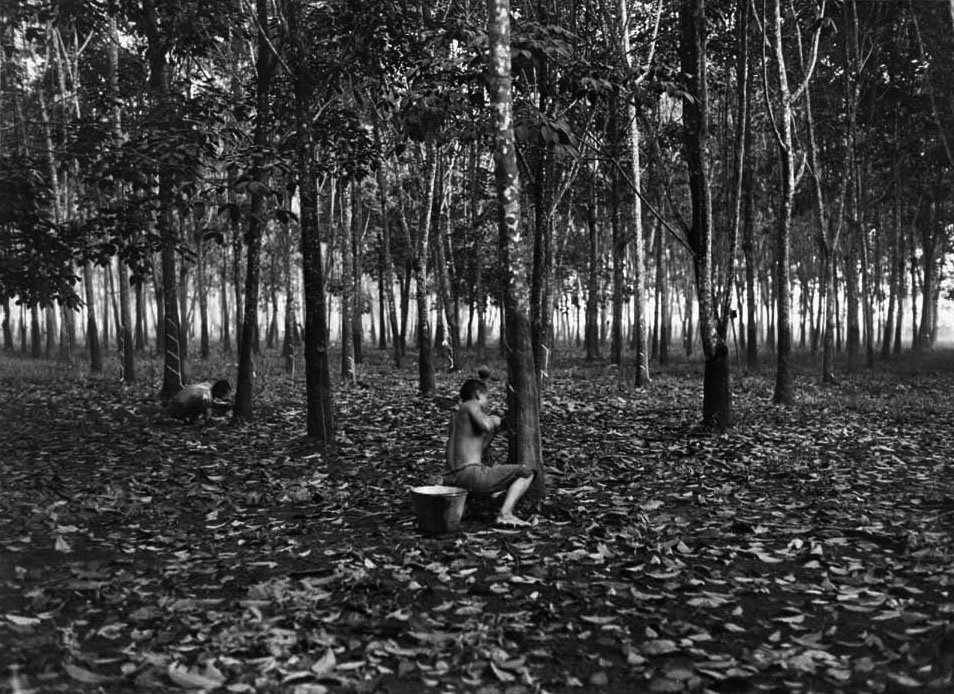
A rubber tapper crouching at the base of a tree in a rubber plantation, a bucket beside him.
Tapping rubber, around 1914. Souvenir of Singapore, 1914. Public domain.

The Workers, and the Rubber Kings You Can Still See Today

Rubber’s massive agricultural explosion required an unprecedented workforce. In the early 1900s, labourers arrived in large numbers from China, India, and Java to work the vast rubber estates. Malaya recorded the highest immigration rate in the entire world between 1881 and 1939.24,25

The rubber boom generated extraordinary wealth, and its enduring legacy is still woven into the fabric of Singapore today through the footprints of its pioneering industrial leaders:

Rubber fortunes you can still see
Tan Kah KeeRubber planterSchools

A visionary planter who owned more than 4,000 hectares of rubber across Singapore and Malaya. He channelled his success into education, helping to found Tao Nan, Ai Tong, and The Chinese High School in Singapore, as well as Xiamen University in China.26,27,28

Lee Kong ChianRubber trader and bankerOCBC

A masterful trader and banker whose enterprise, Lee Rubber, grew to become the world’s largest rubber exporter after the Second World War. He played a pivotal role in forming OCBC Bank, and his Lee Foundation has contributed millions to universities and the National Library.29,30

When the Great Depression hit, the global rubber market suffered a devastating crash. The price of rubber plummeted by about 85 per cent.31 The financial shockwave was so severe that by 1934, even the vast business empire of Tan Kah Kee was forced into winding up.26

Singapore: The Middleman Getting Rich

While the forests were being cleared across the horizon, Singapore found its fortune in a different role: the ultimate middleman.

With very little landmass, Singapore’s enterprising merchants made their wealth through trade, buying raw rubber from the vast plantations of Malaya and Sumatra and selling it directly to eager buyers in Europe and America.32 This strategy paid off spectacularly: between 1921 and 1925, Singapore’s rubber exports grew almost five times over.31
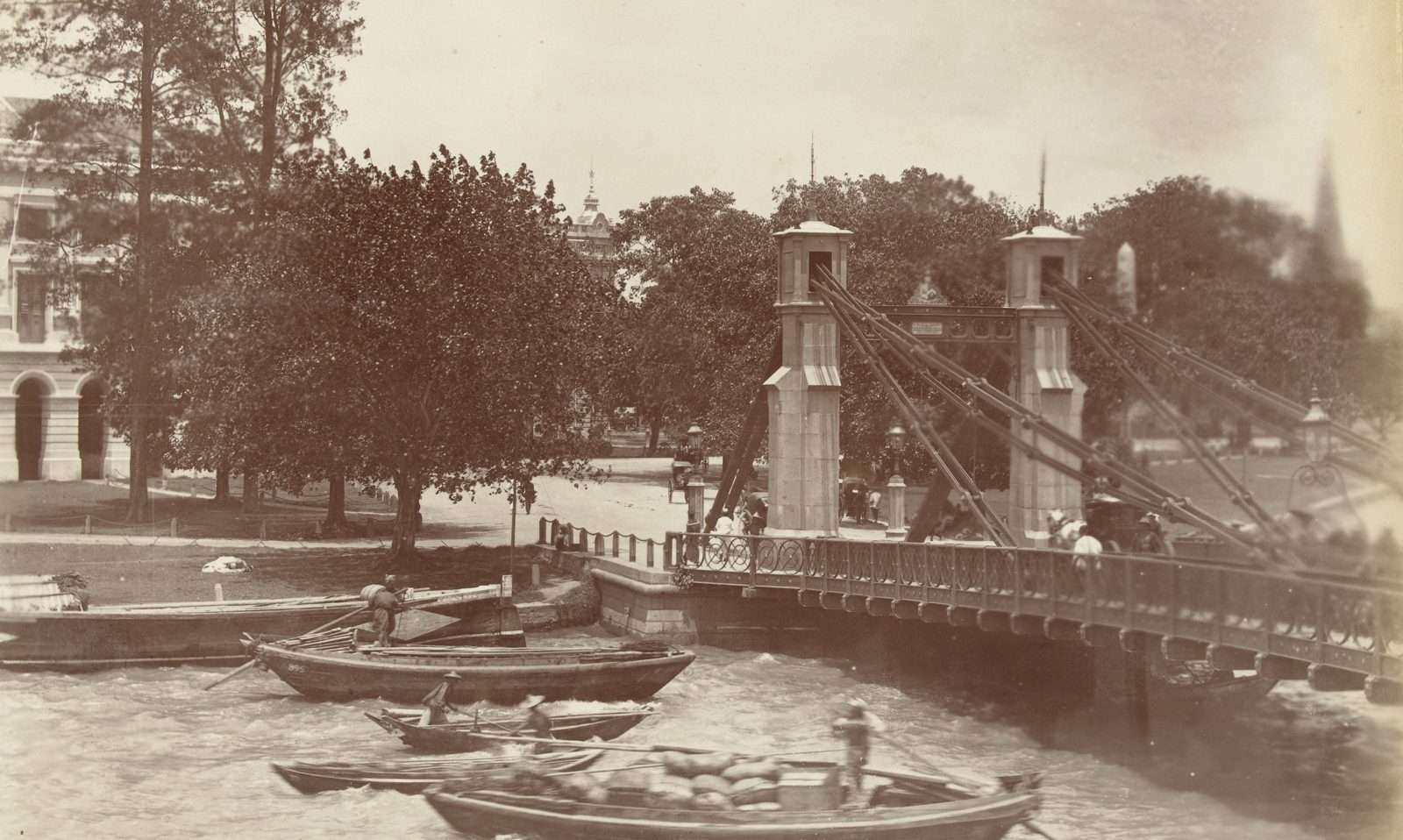
Wooden cargo boats loaded with sacks on the Singapore River beside the Cavenagh Bridge, with carriages crossing the bridge.
Cargo boats on the Singapore River at Cavenagh Bridge, around 1890 to 1910. Rijksmuseum, Amsterdam. Public domain.

Beyond the docks, the island evolved into the central brain for the entire regional boom. Even though the physical work took place miles away, the crucial orders, financing, and logistics for many of the estates ran through the city.33 Operating simultaneously as the region’s premier marketplace, head office, and bank, Singapore was successfully transformed by trade into a global financial powerhouse.

After 1945

Post-War Timber: How the Forests Helped Rebuild Europe and Japan

The post-Second World War rebuilding boom stripped the jungles, and the world made a fortune.

The aftermath of the Second World War changed everything. Post-war reconstruction across Europe and Japan triggered an insatiable international appetite for construction materials, kicking off a frantic race to commercialise the region’s most valuable forest hotspots in Burma, Borneo and Sumatra.34,35,36 Between 1970 and 1985, Japan alone took half of the world’s imported logs.37

True to form, Singapore stepped right back into its role as the ultimate middleman. Capitalising on its deep-water ports, the island became the premier distribution and processing hub for timber.38,39

From the 1960s

Palm and Paper: In Your Biscuits, On Your Desk

Palm and pulp became the new king and queen.

As global markets evolved, palm and wood pulp became the undisputed king and queen of commodities. Palm trees yield more oil per hectare than any rival crop.40 Today, this liquid gold sneaks into as many as four in ten supermarket products, existing in biscuits and shampoo.41 The region adapted to this green gold rush in distinct waves:

  • Malaysia (1960s): Independent planters eagerly ditched rubber trees for high-yielding oil palms,42 generating about US$24 billion in 2024 and supporting 440,000 smallholders.43,44
  • Indonesia (1970s–1990s): Cultivation crept from 150,000 hectares in the 1970s to an explosion of 2.5 million hectares by 1997,45,46 turning palm into a US$23 billion export engine by 2024 that sustains about 2.6 million farming households.47,48

However, satisfying the world’s appetite for paper and palm reached into Southeast Asia’s forests. Between 1990 and 2010, Southeast Asia lost about 32 million hectares of forest, with plantations the main cause.4

Through it all, Singapore remained the ultimate middleman. Sitting comfortably across the strait, the city-state serves as the brain for the operation, hosting some 400 global trading firms, along with the banking, law and logistics that serve the massive harvest next door.49

The Long Shadow of the Canopy

From the first Teochew planters boiling gambier in the late 1700s to the modern trading giants filling supermarket shelves today, the story of Maritime Southeast Asia is a story of incredible environmental transformation.

Over two centuries, the region’s ancient forests were systematically traded to build the modern world. These crops built global empires, laid the foundations for modern cities like Singapore and Medan, and secured the livelihoods of millions of smallholder families today.44,48

The wild jungles have largely receded, and the staggering fortunes pulled from their soils remain permanently etched into the wealth, the architecture, and the very DNA of the region.

What Will the World Want Next?

For two hundred years, the forests of Singapore, Malaysia, and Sumatra were cleared for what the world wanted. Empires came and went, flags were lowered, and new nations were born, but the global orders never stopped. While the crops changed and fortunes were made, the forest paid the bill.

If the world decides it wants its remaining forests left standing, for the orangutans, tigers, and elephants that still live in them, then for the first time in history, the forest itself could be the ultimate fortune. Can we find wealth by keeping the wild canopy alive?

All chapters

Notes and sources (49)
  1. Chia Jie Lin (April 2021), “Deforestation in 19th-century Singapore”, BiblioAsia 17(1): 12.5 million gambier trees and 1.5 million pepper vines in over 540 plantations by 1855; some 90 per cent of primary forest lost by the turn of the 20th century. Link
  2. Economic History of Malaysia, “Change in the Malaysian economy circa 1800–1990”: rubber acreage from 345 acres (1897) to 2.3 million acres (1922), about 140 to 930,000 hectares. The 1897 figure covers the Federated Malay States only. Link
  3. Pelzer, K.J. (1982), Planters against Peasants, Nijhoff (open access): from 75 hectares to “upwards of half a million hectares” allotted to estates in East Sumatra by the Second World War. Link
  4. Stibig, H.-J., Achard, F., Carboni, S., Raši, R. and Miettinen, J. (2014), “Change in tropical forest cover of Southeast Asia from 1990 to 2010”, Biogeosciences 11: 247–258: forest cover of 268 million hectares in 1990 and 236 million in 2010; conversion of forest to cash-crop plantations, including oil palm, the main cause. 32 million hectares and 12 per cent are our arithmetic. Link
  5. Roots.gov.sg, “Founding of Modern Singapore”: the British trading post at the tip of the Malay peninsula, on the route to China. Link
  6. National Library Board, Infopedia, “Gambier” (Naidu Ratnala Thulaja): about 20 gambier plantations in 1819; “Most of the produce was exported to China”; British demand for dyeing and tanning in the 1830s; plantations moved mainly to Johor from the late 1840s as the soil became infertile. Link
  7. Timothy Pwee (April 2021), “From Gambier to Pepper: Plantation Agriculture in Singapore”, BiblioAsia 17(1): much of the produce went to Batavia and around the region; from the 1830s a source of tannic acid for tanning and dyeing; Seah Eu Chin “the largest gambier planter in Singapore”. Link
  8. Mongabay (December 2023), on Chisholm et al. (2023), PNAS: Singapore’s biodiversity loss since 1819, and about one per cent of primary forest remaining. (Source for the “Singapore’s own forest” graphic.) Link
  9. Peggy Loh (September 2015), “Shared crop and heritage”, New Straits Times: Temenggong Daeng Ibrahim invited the planters to Johor; river permits (surat sungai). Link
  10. P. Lim Pui Huen (1998), “Past and Present Juxtaposed: The Chinese of Nineteenth Century Johor”, SOJOURN 13(1): leases called surat sungai, held by the kangchu; “Revenue farming was an integral part of the kangchu system.” Link
  11. Ranjit Singh Malhi (23 February 2021), “Here’s the truth about Chinese planters in 19th century Johor”, Free Malaysia Today (opinion), citing James C. Jackson, Planters and Speculators (1968): Johor the largest gambier producer in the world during the 1880s. Link
  12. Xu Xiaodong (2015), Genesis of a Growth Triangle in Southeast Asia, PhD thesis, Leiden University, pp. 129–30: Johor became “the world’s largest gambir producer and export centre”. Link
  13. Encyclopaedia Britannica (1911), “Johor”: revenue “chiefly derived from the revenue farms for opium, spirits, gambling, &c., and from duty on pepper and gambier”. Text via Wikisource. Link
  14. Britannica, “Jacobus Nienhuys”: the Dutch tobacco planter who opened up Deli, near Medan, from 1863. Link
  15. Mulder, E. (1898), Cultivation of Tobacco in Sumatra, US Department of Agriculture, Division of Soils, p. 19: the felled trees are left to dry so that they can be burned, and the land is burned off “until the growth is entirely reduced to ashes”. Link
  16. “Deli Universal NV”, International Directory of Company Histories, Vol. 66 (Gale, 2004): “By the outbreak of World War I, more than 92 percent of all imported wrapper leaf in the United States came from Sumatra.” Link
  17. Encyclopaedia Britannica, “Medan”: tobacco plantations from 1873; “The Dutch colonial government pronounced Medan a city in 1886.” Link
  18. Frank, Z. & Musacchio, A. (2008), “The International Natural Rubber Market, 1870–1930”, EH.Net Encyclopedia: the bicycle, then the pneumatic car tyre, which came to account for well over half of US rubber company sales. Link
  19. Science Museum Group, “Silvertown Rubber Co Ltd”: waterproofing and insulating materials, insulated wires and cables. Link
  20. National Library Board, Infopedia, “Henry Nicholas Ridley” (Vernon Cornelius): nicknamed “Mad Ridley” or “Rubber Ridley”; “carried rubber seeds in his pockets”. Link
  21. National Parks Board, Singapore Botanic Gardens, “1888: Ridley and the Malayan rubber industry from 1896”: coffee plantations devastated by disease; the Gardens the principal source of seed; “By 1920, Malaya was producing over half the world’s rubber.” Link
  22. Singapore Department of Statistics, environment data: land area 745.1 sq km (as at June 2026). 930,000 ha is 9,300 sq km, about 12.5 times today’s Singapore (our arithmetic). Link
  23. Economic History of Malaysia, “Economic inequality in British colonial Malaya”, citing Butcher (1979): “In 1913, British interests owned three-fifths of Malaya’s planted area”; most rubber and tin earnings were repatriated to the metropolitan capital. Link
  24. Amarjit Kaur (2012), “Labour Brokers in Migration: Understanding Historical and Contemporary Transnational Migration Regimes in Malaya/Malaysia”, International Review of Social History 57: Malaya’s immigration rate the highest in the world, 1881 to 1939 (Huff and Caggiano). Link
  25. Reid, A. (2010), “Malaysia/Singapore as Immigrant Societies”, Asia Research Institute Working Paper 141, National University of Singapore: Malaya’s immigration rate “was the highest in the world throughout the period 1881-1939”; Javanese plantation labourers recruited through Dutch channels. Link
  26. Tan Kah Kee Foundation, biography: more than 10,000 acres (about 4,050 ha) of rubber at his peak; “In Feb 1934, Tan Kah Kee Ltd. was liquidated and wound up.” Link
  27. Roots.gov.sg, “Tan Kah Kee”: involved in setting up more than 10 schools, including Tao Nan School, Ai Tong School and The Chinese High School. Link
  28. Xiamen University, history: founded by Tan Kah Kee in 1921. Link
  29. Bonny Tan (2008), “Entrepreneur and philanthropist remembered”, BiblioAsia: Lee Rubber “the world’s largest rubber exporter in the post-war era”. Link
  30. National Library Board, Infopedia, “Lee Kong Chian (Dr)”: a central role in the 1932 merger that formed OCBC; gifts to the National Library ($375,000, and S$60 million from the Lee Foundation in 2003); gifts to Nanyang University, the University of Malaya and Amoy University. Link
  31. Darren Seow (2026), “Singapore’s Experience of the Great Depression”, BiblioAsia 22(3): rubber from 34 cents a pound in 1929 to 4.95 cents in June 1932; the value of rubber exports rose 384 per cent between 1921 and 1925. Link
  32. Singapore Chinese Cultural Centre, Culturepaedia (14 August 2025), “Traditional trades of the Hokkiens in Singapore”: rubber sourced from the Malay Peninsula and the Dutch East Indies. Link
  33. National Library Board, Infopedia, “Guthrie & Co.” (valid as at March 2020): a Singapore firm that served as agent for several rubber plantation companies in Malaya, Borneo and Sumatra, and for shipping, banking and insurance businesses. Link
  34. FAO, Unasylva 1(2), “Report on European Timber Position” (about 1947): “the war-devastated countries are faced with critical needs of timber”; tropical sources named as a possible new supply. Link
  35. U Tun Aung & U Thoung Nyunt, FAO (about 2001), timber elephants in Myanmar: about 2,500 working elephants in 1945, 5,249 by 1988–89. Link
  36. Ross, M.L. (2001), Timber Booms and Institutional Breakdown in Southeast Asia, Cambridge University Press: timber in the Philippines, Sabah and Indonesia boomed in the 1950s, 1960s and early 1970s; Sarawak’s share of the hardwood log market rose from 3.4 to 38 per cent, 1975 to 1985. Link
  37. United Nations University Press (archived chapter, on Borneo and the Malay Peninsula): Japanese demand for hardwood logs rose from the late 1950s; between 1970 and 1985 “Japan alone took half the world’s rising imports of sawlogs”. Link
  38. Tan Jia Yi (2018), “Kallang: A Trailblazer”, MuseSG 11(1), on Roots.gov.sg: Kallang a key location for the regional timber industry; the sawmills busy in the 1960s and 1970s; moved to Sungei Kadut in 1976. Link
  39. Wong Liang Han (1982), “A Brief on the Timber Industry Situation in Singapore”, UNIDO: plywood and veneer expanding since 1964; knocked-down furniture for export; logs from Indonesia and Malaysia. Link
  40. Conservation International and WWF-US (May 2015), “Sustainable Sourcing Guide for Palm Oil Users”: oil palm produces four to ten times more oil per hectare than any other vegetable oil crop. Link
  41. Meijaard, E.M. et al. (2025), “Does palm oil really rule the supermarket?”, Environmental Research: Food Systems 2(4): explicitly listed in about 7.9 per cent of products; up to 40 per cent could contain it. Link
  42. New Straits Times (2017), “Celebrating 100 years of Malaysian palm oil”: first commercial estate 1917; oil palm introduced to FELDA settlers in 1961. Link
  43. Malaysian Palm Oil Board, “Overview of the Malaysian Oil Palm Industry 2024”: export earnings of palm oil and palm-based products of RM109.39 billion in 2024. Converted to US dollars at the 2024 average rate of about RM4.58 to the dollar (our arithmetic). Link
  44. Malaysian Palm Oil Board (1 September 2022), via New Straits Times: “more than 440,000 smallholders” cultivate almost 27 per cent of the oil palm area. Link
  45. Dialogue Earth, “An illustrated history of industrial palm oil”: Indonesia’s first oil palm plantation in Sumatra in 1911; plantations reached about 150,000 hectares by the 1970s and 600,000 hectares by 1985, before the boom of the 1990s. Link
  46. Casson, A. (2000), The Hesitant Boom, CIFOR Occasional Paper 29: oil palm area from 106,000 hectares in 1967 to 2.5 million hectares in 1997. Link
  47. Databoks/Katadata (20 February 2025), “Indonesia’s palm oil exports weaken in 2024”, from Statistics Indonesia (BPS) data: exports worth US$22.87 billion in 2024. Link
  48. UNDP Indonesia (27 August 2021): “approximately 2.6 million smallholders working on 6 million hectares”. Link
  49. Peter Ong, Chairman of Enterprise Singapore (24 January 2024), opening speech at Commodity Trading Week Asia Pacific: “some 400 global traders”. Link